Fitness & Body Recomposition
Exercise Order and Programming
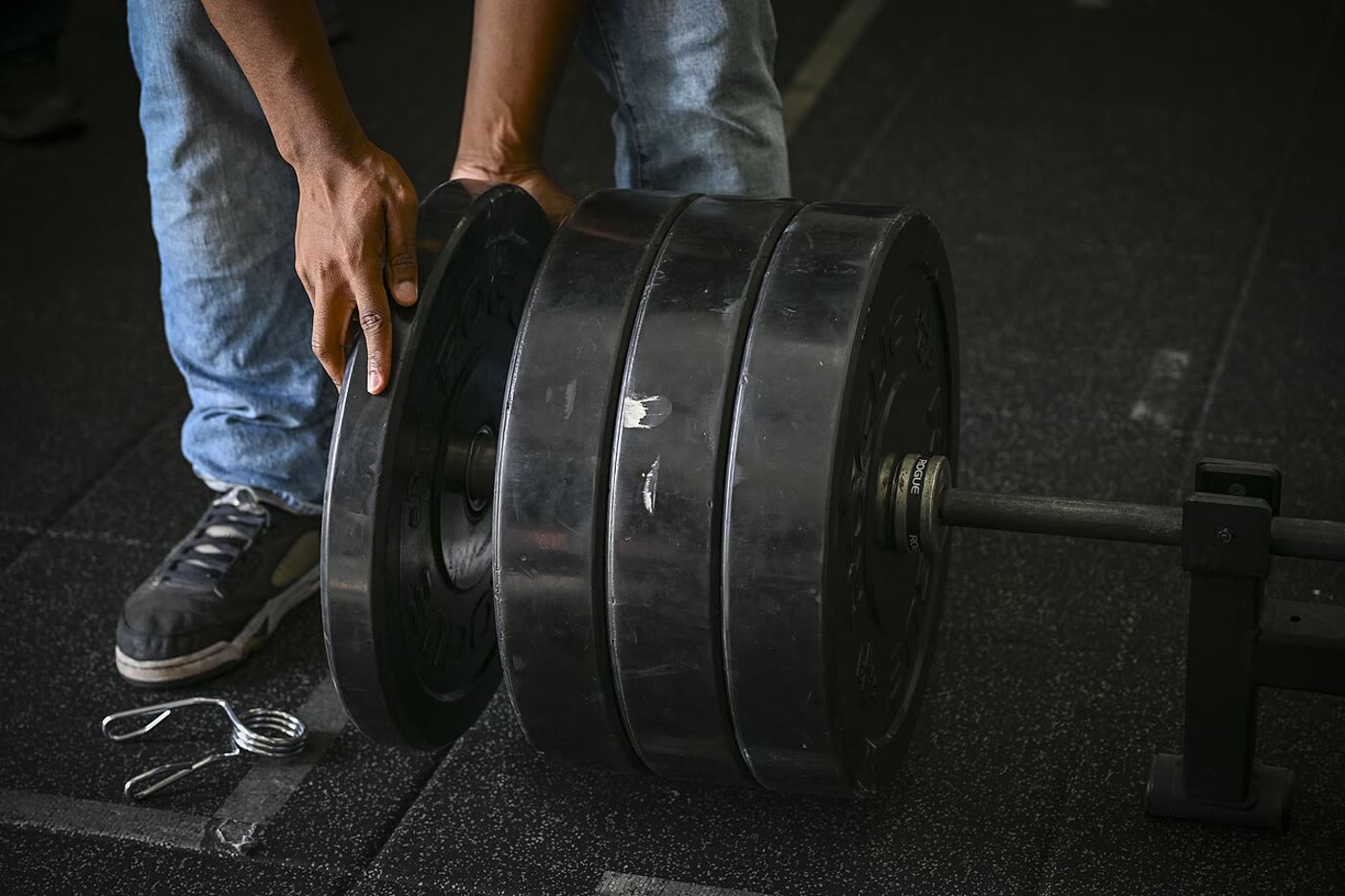
Image: Skelton Gym Powerlifting Competition by U.S. Air Force photo by Senior Airman Haiden Morris, Public domain, via Wikimedia Commons.
If you've come back to training in your 40s or 50s, the order you do exercises in matters more than it did at 25 — not less. Recovery is slower, joints need a longer on-ramp, and the first 20 minutes of a session are when your form is safest. Get the sequence right and every workout does more with less wear. This guide gives you the order, a week that fits a real schedule, and the few rules that keep you progressing without breaking down.
Who this is for
Adults roughly 40–60 who lift (or want to) two to four times a week and care about staying strong, mobile, and injury-free — not chasing a competition total. If that's you, the principles below are built around your recovery capacity, not a 22-year-old's.
The one rule that decides exercise order
Do the hardest, most technical, most fatiguing work while you're fresh. Everything else follows from that:
- Compound lifts (squat, hinge, press, row) before isolation (curls, raises, extensions).
- Larger muscle groups before smaller ones.
- Anything explosive or heavy before anything you can safely grind out tired.
- The lift you most want to improve goes first, when focus and force are highest.
A session that follows this holds together even on a bad day:
- Dynamic warm-up — 8–10 minutes (longer than you think you need at this age)
- One heavy or power-focused main lift
- A second compound lift
- Two or three accessory movements
- Core and any single-joint "finisher" work
A week that fits a real life
This four-day upper/lower plus full-body split gives every muscle group two exposures a week with recovery built in — the sweet spot for most people over 40.
| Day | Focus | Main lifts |
|---|---|---|
| Monday | Upper push | Bench or incline press, shoulder press |
| Tuesday | Lower | Squat variation, hip hinge |
| Wednesday | Recovery — walk or easy cardio | — |
| Thursday | Upper pull | Rows, assisted or full pull-ups |
| Friday | Full body | One squat, one hinge, one press |
Only training three days? Run Monday, Wednesday, Friday as full-body sessions and rotate which lift you put first. Consistency at three days beats an ambitious five-day plan you abandon by week three.
The variables, set once
- Sets: 3–4 working sets on main lifts, 2–3 on accessories.
- Reps: 5–8 for strength, 8–12 for muscle. Both build the muscle that protects joints and metabolism.
- Rest: 2–3 minutes on the heavy compounds, 60–90 seconds on accessories. Don't rush the big lifts to "keep the heart rate up" — that's what the Wednesday walk is for.
- Leave 1–2 reps in reserve. Training to failure on every set is the fastest route to a tweaked shoulder or a stalled month.
What changes after 40 — and how to program around it
This is where generic templates fail you. Three things genuinely shift with age, and each has a simple fix:
- Tendons and connective tissue adapt slower than muscle. Your strength can climb faster than your joints are ready for. Add weight in smaller jumps (2–5% at a time) and hold new loads for an extra session before progressing.
- The warm-up is non-negotiable. A dedicated 8–10 minutes — light cardio then the first movement of the day at half-weight for two sets — is the single biggest injury-prevention lever you have. Cold heavy squats are how people over 40 get hurt.
- Recovery is the ceiling, not motivation. Progress is limited by what you recover from, so watch sleep and soreness rather than pushing frequency. Our recovery tracking guide covers the specific markers to watch.
The mistakes that stall people
- Cramming too many exercises in — four to six quality movements beats ten rushed ones.
- Chasing heavier weight at the cost of clean form (the trade gets worse with age, not better).
- Skipping the deload — take an easier week every 4–6 weeks on purpose, before your body forces one.
- Jumping into an advanced program built for someone who trains six days a week and is half your age.
Progressing without breaking down
- Add weight only when you can complete every prescribed rep with a rep or two to spare.
- Or add a single rep per set each week before touching the weight.
- Build strength over months, not weeks — the tortoise wins this one decisively after 40.
- Write it down. A notebook or an app (Strong, Fitbod) turns "I think I'm progressing" into proof.
If you want the deeper theory behind cycling your training load, see periodization basics. For how hard and how often to train, the training frequency guide pairs directly with this one.
For a program tailored to any injury history or medical condition, a certified professional through ACE or the NSCA can adapt these principles to you.
FAQs
- What is the ideal order of exercises in a workout routine?
Start with compound exercises when fresh (squats, deadlifts, bench press), followed by isolation exercises. Begin with larger muscle groups and progress to smaller ones. Core exercises can be done at the beginning or end. - Should I do cardio before or after weight training?
If your primary goal is building strength or muscle, perform cardio after weights or on separate days. Doing intense cardio before weights can deplete energy stores and compromise lifting performance. - How many exercises should I do per muscle group?
Generally, 3-4 exercises per major muscle group is sufficient. For larger muscle groups like back or legs, you might do 4-5 exercises, while smaller muscles like biceps might need only 2-3 exercises. - What's the optimal rest period between exercises?
For strength training (heavy weights), rest 2-5 minutes between sets. For hypertrophy (muscle growth), 1-2 minutes. For endurance, 30-60 seconds. Compound exercises require longer rest periods than isolation moves. - How often should I change my exercise order?
Change your routine every 4-6 weeks to prevent plateaus. However, maintain consistent exercise ordering principles (compound before isolation, large before small muscles) even when modifying specific exercises. - Is it better to do all sets of one exercise before moving to the next?
Yes, in most cases. This approach, called straight sets, allows proper focus and intensity per exercise. However, supersets and circuit training can be effective for specific goals like conditioning or time efficiency. - How should I structure my workout splits?
Common effective splits include push/pull/legs, upper/lower, or body part splits. Choose based on training frequency preferences and recovery capacity. Ensure at least 48 hours between training the same muscle groups. - What's the best way to incorporate new exercises into my routine?
Add new exercises at the beginning of your workout when you're fresh and can focus on proper form. Start with lighter weights and gradually increase as you master the movement pattern. - Should I prioritize certain muscle groups on specific days?
Yes, prioritize lagging muscle groups or those aligned with your current goals by training them first in your workout when energy levels are highest. This ensures optimal performance for these priority areas. - How do I adjust exercise order for injury prevention?
Perform proper warm-ups targeting the muscles you'll train. If you have any joint concerns, do exercises that stabilize those joints first. Avoid exercising fatigued muscles that might compromise form in subsequent compound movements.