Fitness & Body Recomposition
Progressive Overload: How to Keep Making Progress
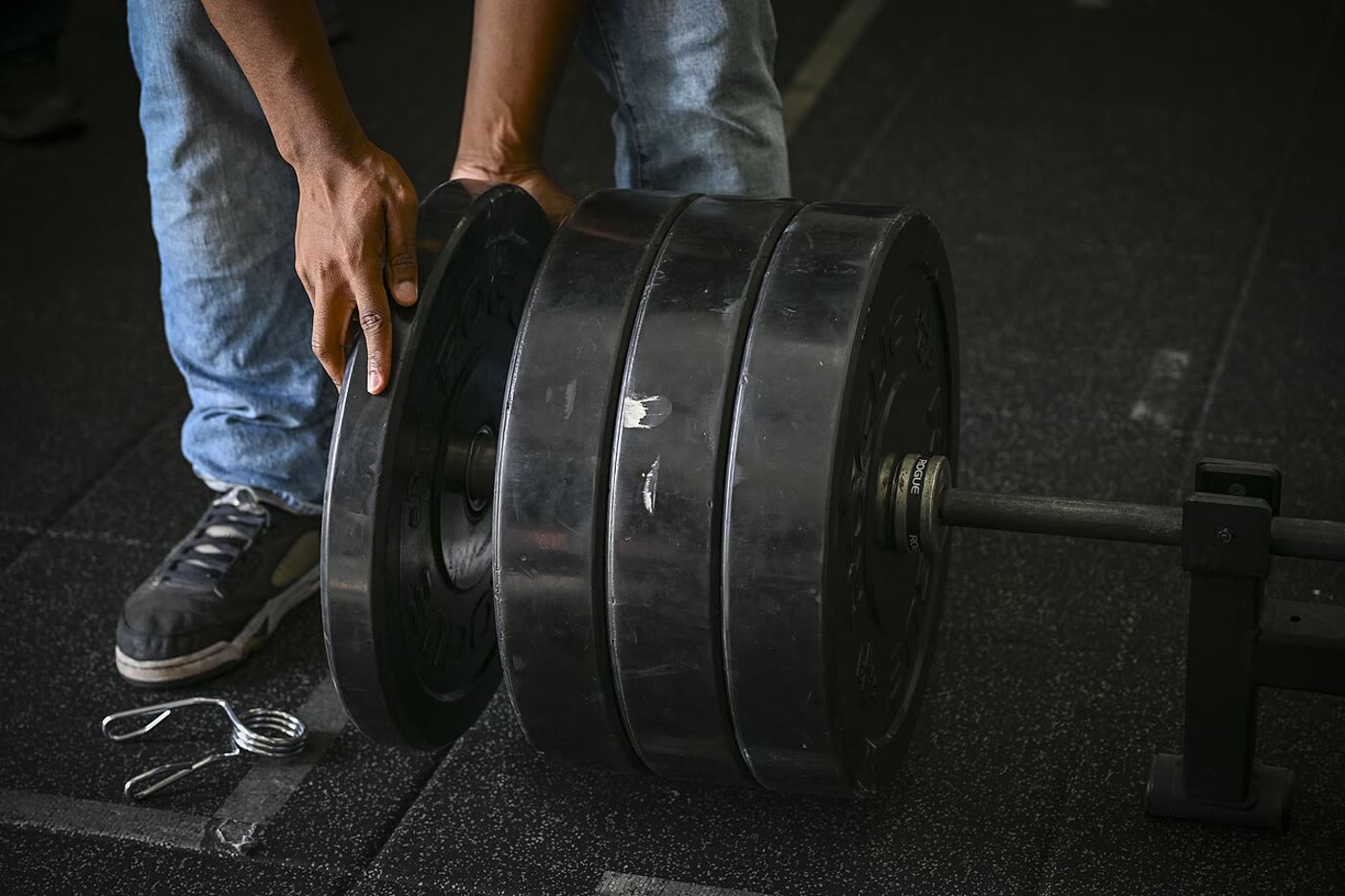
Image: Skelton Gym Powerlifting Competition by U.S. Air Force photo by Senior Airman Haiden Morris, Public domain, via Wikimedia Commons.
If your training has stalled, the reason is almost always the same: you stopped asking more of your body. Progressive overload - gradually increasing the demand over time - is the single principle behind every gain in strength, muscle, and endurance. Miss it and you plateau no matter how hard each session feels. The good news is that adding weight is only one of many ways to apply it, and the others are what keep you progressing when the weight cannot always go up.
Who this is for
Anyone who trains and wants to keep improving rather than spinning their wheels - beginners building a base and returners in their 40s and 50s who want progress without the joint flare-ups that come from pushing too fast.
Why progressive overload works
Your body adapts to the demands you place on it, then stops. Lift the same weight for the same reps every week and you have given it no reason to change. Ask for a little more - another rep, a bit more weight, one more set - and it rebuilds slightly stronger to meet the new demand. Do that consistently and small increments compound into big changes over months. Remove the progression and even a hard workout just maintains what you already have.
The many ways to progress (not just weight)
This is where most people get stuck - they think progression means only adding plates. When the weight cannot go up, these do the job:
| Method | How to apply it |
|---|---|
| More weight | Add the smallest increment when a set feels solid |
| More reps | Add a rep per set before increasing weight |
| More sets | Add a working set to a lift over time |
| Better form / fuller range | A deeper squat or fuller press is more work at the same weight |
| Slower tempo | Control the lowering phase to increase time under tension |
| Less rest (density) | Do the same work in less time |
Rotate through these rather than only chasing weight, and progress stays available for years.
A simple plan to apply it
- Pick a rep range (say 8 to 12) and a starting weight you can handle with one or two reps in reserve.
- Each session, aim to add a rep to a set. When you hit the top of the range on all sets, add the smallest weight increment and drop back to the bottom of the range.
- Write it down. Progression you cannot see is progression you cannot manage. A notebook or an app turns guesswork into a plan.
This pairs directly with our training volume guide (how much total work) and the exercise order and programming guide (how to structure a session).
Progress and recovery are two sides of one coin
You do not grow during training - you grow while recovering from it. Push the overload faster than you can recover and progress stalls or reverses. Signs you are ahead of your recovery: persistent soreness, stalling lifts, poor sleep, flat mood. The fix is not more effort; it is a lighter week. Our deload week guide covers exactly that.
What changes after 40
The principle holds at every age, but the pace changes. Muscle can gain strength faster than tendons and connective tissue adapt, and that gap widens with age - which is how people over 40 get hurt chasing numbers. Two adjustments:
- Progress in smaller steps. Add weight in 2 to 5 percent jumps and hold a new load for an extra session before moving on, giving joints time to catch up.
- Lean on the non-weight methods. Adding reps, range, and tempo lets you keep progressing while sparing your joints the constant load increases.
Breaking through a plateau
- Take a deload week - often the stall is accumulated fatigue, not a real ceiling.
- Switch the progression method - if weight is stuck, chase reps, sets, or tempo instead.
- Check the basics: enough protein, enough sleep, enough total food. Progress needs raw materials.
- Change the exercise variation to give a stubborn lift a fresh stimulus.
The mistakes that stall progress
- Adding weight too fast and losing form - or getting hurt.
- Only ever chasing weight and ignoring the other progression levers.
- Not tracking, so you have no idea whether you are actually progressing.
- Never deloading, then blaming a plateau on age when it is just fatigue.
FAQs
- What is progressive overload?
Gradually increasing the demands on your body over time - more weight, reps, sets, range, tempo, or less rest - so it keeps adapting. It is the core principle behind all gains in strength and muscle. - How quickly should I add weight?
Only when you can complete every prescribed rep with good form and one or two reps in reserve. Use the smallest increment available, and after 40 favour 2 to 5 percent jumps held for an extra session to let joints adapt. - What if I cannot add more weight?
Progress another way: add a rep or a set, slow the lowering phase, use a fuller range of motion, or shorten your rest. These all increase the demand without touching the weight. - How do I know if I am progressing too fast?
Persistent soreness, stalling lifts, disrupted sleep, and low motivation are signs you are outrunning your recovery. Take a lighter week and check your sleep, protein, and total food intake. - Do I need to progress every single session?
No. Progress over weeks and months, not every workout. Some sessions you simply repeat and consolidate. The trend over time is what matters, especially as you get older. - Should I track my workouts?
Yes. Recording weights, reps, and sets is the only reliable way to apply progressive overload - it turns "I think I am improving" into a clear picture you can act on. - Is progressive overload safe after 40?
Yes, applied sensibly. Progress in smaller steps, prioritise form over numbers, and use non-weight methods to spare your joints. The principle keeps you gaining strength well into your 50s and 60s. - Why have I stopped making progress?
Usually accumulated fatigue, a single overused progression method, or a gap in recovery (sleep, protein, food). Try a deload, switch how you progress, and shore up the basics before assuming you have hit a real ceiling.