Fitness & Body Recomposition
Strength Training for Women Over 40
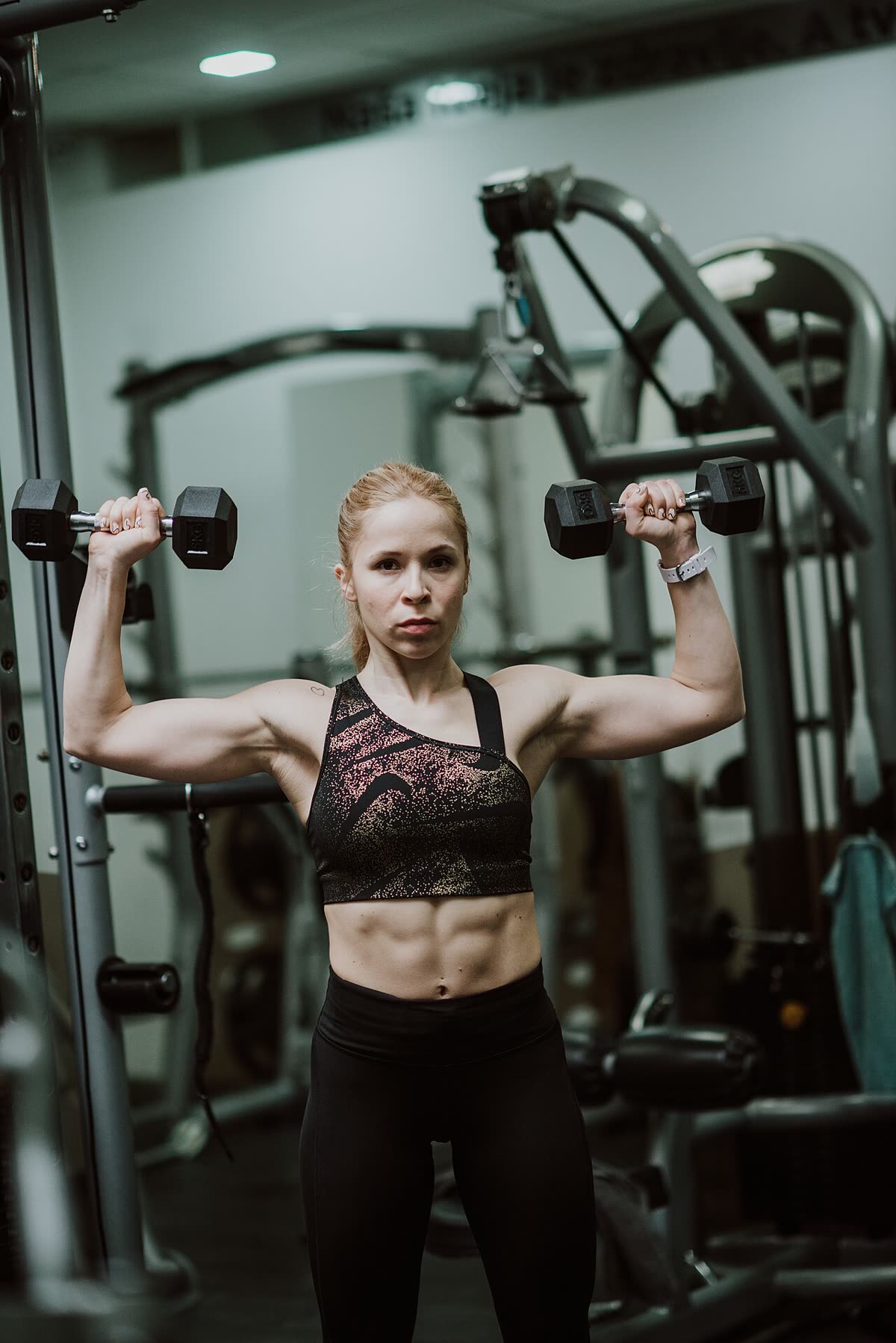
Image: Shoulder press with dumbbells by Shixart1985, CC BY 2.0, via Wikimedia Commons.
Let us clear the biggest myth first: lifting weights will not make you bulky. Women do not have the hormonal profile to add large amounts of muscle easily, and the strength training that builds a lean, capable body is the same training that protects your bones and helps you through menopause. If you are a woman over 40, strength work is arguably the highest-value thing you can do for your health - and this guide shows you how to start without a gym background.
Who this is for
Women roughly 40 and over who want to get stronger, protect against bone loss, and manage the body changes that come with perimenopause and menopause - whether you have never touched a weight or are returning after years away. No competition goals required; this is about strength for a good, capable life.
Why it matters more now
Several things converge for women from 40 on, and strength training answers all of them:
- Muscle loss accelerates with age unless you train, taking strength and metabolism with it.
- Bone density falls, fastest around and after menopause, raising fracture risk. Loading your skeleton protects it - see our bone strength guide.
- Estrogen decline shifts fat toward the middle and disrupts sleep and recovery. Strength work counters the metabolic side. Our menopause training guide goes deeper.
None of this is about vanity. It is about staying strong, steady, and independent for decades.
How to start
You need less than you think. Two or three full-body sessions a week, built on a handful of movements:
- Squat pattern - bodyweight, goblet squat, or leg press.
- Hinge - hip thrust, deadlift variation.
- Push - press-up (from the knees or a wall to start), dumbbell or machine press.
- Pull - row, assisted pull-up, lat pulldown.
- Carry or core - a loaded walk, a plank.
Start with 2 to 3 sets of 8 to 12 reps at a weight that is challenging by the last couple of reps but leaves your form intact. If you are brand new to the movements, our strength training basics walks through form.
Progress with progressive overload
Muscle and bone strengthen only when you gradually ask more of them. That is progressive overload, and it is the whole game:
- Add a little weight when you can complete every rep with one or two in reserve.
- Or add a rep per set before touching the weight.
- Progress over months. Strength climbs steadily well into your 50s and 60s.
The deeper mechanics are in our progressive overload guide.
Eat to build and keep muscle
Training is the signal; food is the material. Under-eating protein is the most common reason women stall:
- Aim for roughly 1.2 to 1.6 grams of protein per kilogram of body weight, spread across meals.
- Eat enough overall - severe restriction burns the muscle you are working to build.
- Support bone with calcium and vitamin D. See our nutrition after 40 guide.
Recovery and staying injury-free
- Leave at least a day between hard sessions; recovery is more of a limit after 40.
- Warm up for 5 to 10 minutes and start each new movement light.
- Prioritize sleep - it is where the adaptation actually happens.
- Progress in small steps; connective tissue adapts slower than muscle, so patience prevents tweaks.
Myths worth dropping
- "Lifting makes women bulky." It does not. It builds lean strength and shape.
- "Light weights and high reps are safer for women." Bone and muscle need a real challenge; going too light forever wastes the benefit.
- "Cardio is enough." Cardio is great for the heart but does little for the muscle and bone strength training protects.
- "It is too late to start." Women beginning in their 50s, 60s, and beyond gain real strength. The best time to start is now.
To learn form with guidance, a certified trainer through ACE or the NSCA can coach you and adapt around any injury history.
FAQs
- Will strength training make me bulky?
No. Women generally do not have the hormonal profile to add large muscle easily. Strength training builds a lean, strong, capable body while protecting bone and metabolism - especially valuable after 40. - How often should women over 40 lift weights?
Two to three full-body sessions a week is ideal for most. That is enough to build and maintain muscle and bone while allowing recovery, which becomes more important with age. - How much weight should I start with?
Use a weight that feels challenging by the last one or two reps of a set of 8 to 12, while keeping good form. Start conservatively, learn the movement, and add load gradually as it becomes manageable. - Is it safe to lift weights during menopause?
Not only safe but especially beneficial - it counters the muscle and bone loss that accelerate as estrogen falls. Adjust around symptoms and recovery, but keep loading your muscles and bones through the transition. - How much protein do I need for strength training?
Roughly 1.2 to 1.6 grams per kilogram of body weight per day, spread across meals. Adequate protein is essential for building and keeping muscle, and most women who stall are eating too little of it. - Do I still need cardio if I lift?
Some cardio supports heart health and recovery, so include easy sessions like walking or cycling. But it does not replace strength training for muscle and bone - make lifting the priority and cardio the support. - What if I have never trained before?
Start with bodyweight and light weights on a few basic movements, two to three times a week. Learn form first, progress slowly, and consider a few sessions with a trainer to build confidence. - How long until I see results?
Strength often improves within a few weeks as your nervous system adapts, with visible changes over a few months. Bone changes take longer. Consistency over months and years is what delivers the lasting benefits.