Fitness & Body Recomposition
Understanding Body Composition: The Foundation of Physical Change
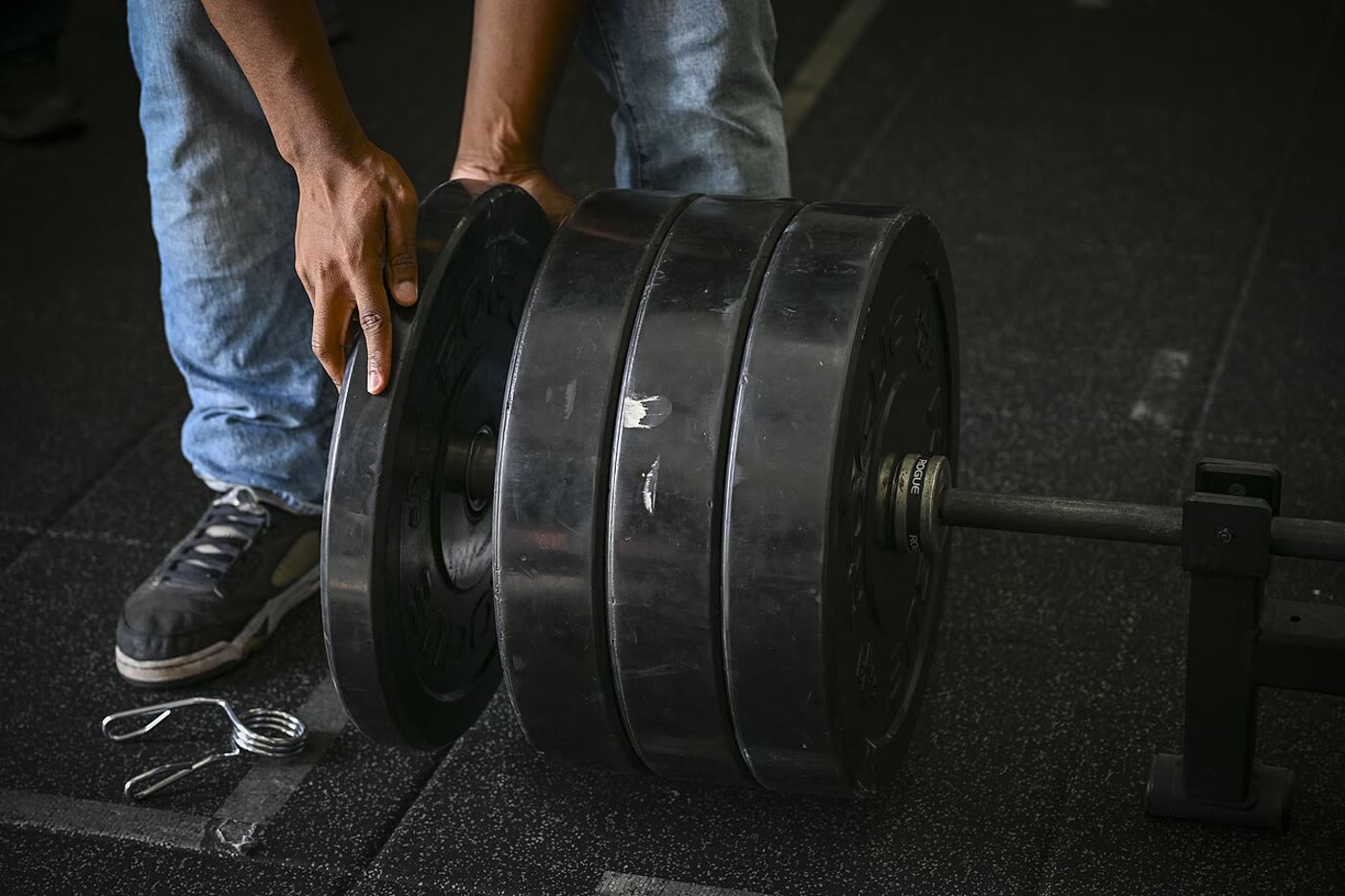
Image: Skelton Gym Powerlifting Competition by U.S. Air Force photo by Senior Airman Haiden Morris, Public domain, via Wikimedia Commons.
Body composition is the breakdown of your weight into fat, muscle, bone, and water — and after 40 it tells you far more about your health than the number on the scale ever will. Two people at the same weight can be a decade apart in health, and the difference is almost always muscle. If you're using training to change your body in midlife, this is the metric to actually watch — because the thing quietly slipping away is the thing worth protecting most.
Who this is for
Adults roughly 40–60 who want to understand what "changing your body" really means beyond weight loss — how to measure it, what's healthy, and why muscle is the priority now in a way it wasn't at 25.
Why this matters more after 40, not less
Here's what the generic guides leave out. From your 30s onward, most adults lose roughly 3–8% of their muscle mass per decade, and it accelerates later in life — a process called sarcopenia. That lost muscle is why metabolism slows, why weight creeps on even when eating hasn't changed, and why strength and balance decline. Body composition matters more with age precisely because the trend runs against you by default. The upside: resistance training and enough protein don't just slow that loss — they reverse a good chunk of it at any age.
Muscle isn't just about looking toned. It's metabolically active tissue that helps regulate blood sugar, supports bone density, and keeps you independent and mobile for decades. Protecting it is one of the highest-return health investments in midlife.
The components, quickly
- Fat mass: essential fat your body needs, plus stored fat.
- Lean mass: muscle, bone, and organs — the part you want to build and protect.
- Body water: fluid inside and around cells, which is why the scale swings 1–2 kg day to day.
How to measure it
| Method | Accuracy | Typical cost |
|---|---|---|
| DEXA scan | Very high (the gold standard) | $100–300 |
| Hydrostatic weighing | High | $50–100 |
| Bioelectrical impedance (smart scales) | Moderate — best for trends | $20–200 |
| Skinfold calipers | Moderate — depends on the tester | $5–30 |
For most people, a one-off DEXA scan to get an accurate baseline, then a cheap home method (a smart scale, or a tape measure at waist and hips) to track the direction of travel, is the sensible combination. What you're watching isn't the exact percentage — it's whether muscle is holding and fat is trending down over months. Measure every 4–8 weeks, same method, same conditions. Body-fat measurement goes deeper on the trade-offs.
Healthy ranges (and why they shift with age)
- Men: roughly 10–20% body fat
- Women: roughly 18–28% body fat
These ranges drift a little higher with age, and that's normal — chasing a 25-year-old's number is the wrong goal. A more useful target after 40 is holding or gaining muscle while keeping fat in a healthy band. Muscle preserved is worth more than a slightly lower body-fat figure.
How to actually improve it
Body recomposition — losing fat and building muscle at the same time — is genuinely achievable in midlife, especially if you're returning to training or carrying higher body fat. Two levers do most of the work:
- Resistance training, 3–4 times a week. This is the non-negotiable that builds and defends muscle. The exercise programming and training frequency guides show how to structure it.
- Protein — more than you think. Older muscle responds less to protein, so aim higher: around 1.6–2.2 g per kg of body weight daily, spread across meals. This is the dietary lever that makes training pay off; the protein guide covers how to hit it.
Support both with adequate calories for your goal, healthy fats, 7–9 hours of sleep, and enough recovery — see recovery tracking. Crash diets work against you here: too little food and too little protein burn muscle alongside fat, which is exactly the wrong trade after 40.
The mistakes that cost you muscle
- Judging progress by scale weight alone — it can't see the muscle-for-fat swap you're aiming for.
- Doing only cardio and skipping strength training — the fastest way to lose muscle while dieting.
- Extreme low-calorie diets that strip muscle along with fat.
- Under-eating protein, which leaves your training results on the table.
To optimise around a medical condition, a registered dietitian via the Academy of Nutrition and Dietetics or a certified trainer via ACE can tailor this to you.
FAQs
- What is body composition and why should I care?
It's the proportion of fat, muscle, bone, and water in your body. It matters more than weight because it reflects the quality of your mass — and after 40, protecting muscle is a better health goal than any scale number. - How is body fat percentage different from BMI?
Body fat percentage measures actual fat; BMI only uses height and weight and can't tell muscle from fat. A muscular person can read "overweight" on BMI while being lean — which is why composition is the better metric. - What are the most accurate ways to measure body composition?
DEXA scans are the gold standard. Hydrostatic weighing and Bod Pod are also reliable; smart scales (bioelectrical impedance) are less precise but useful for tracking trends over time. - What's a healthy body fat percentage?
Roughly 10–20% for men and 18–28% for women, drifting a little higher with age. Ranges vary by individual — the trend matters more than a single target. - How does muscle mass affect metabolism?
Muscle is metabolically active and burns more calories at rest than fat. Losing muscle with age is a major reason metabolism slows — and building it back helps reverse that. - Why does the scale swing day to day?
Water. It's about 60% of body weight and can shift 1–2 kg daily with food, salt, and hydration. Weigh trends across weeks, not single days. - How long until I see changes?
Visible change usually takes 8–12 weeks of consistent training and nutrition, though composition starts shifting before the mirror shows it. - What training works best for body composition?
Resistance training to build and protect muscle, with some cardio for fat loss and heart health. Strength work is the priority, especially after 40. - How does diet affect body composition?
Protein supports muscle (aim 1.6–2.2 g/kg), and overall calorie balance drives fat loss or gain. Adequate protein plus a modest deficit is the recomposition recipe. - Can I improve body composition without losing weight?
Yes — recomposition lets you build muscle and lose fat at the same weight. It's especially achievable for beginners, returners, and those with higher body fat.